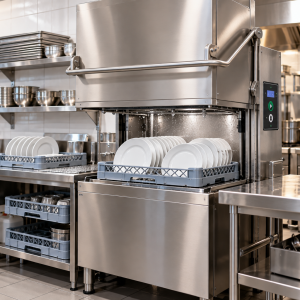
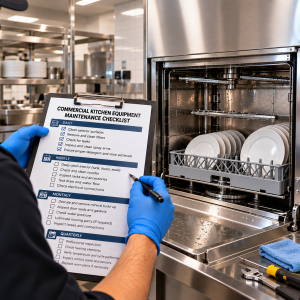
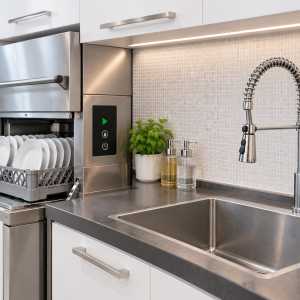
Purchasing a commercial dishwasher is a major investment for any restaurant, hotel, or café. However, before the machine arrives at your establishment, you must ensure your kitchen infrastructure can support it. Overlooking critical commercial dishwasher installation requirements can lead to costly delivery delays, failed health inspections, or inability to operate the unit.
From electrical voltage and amperage to water pressure, temperature, and drainage positioning, proper pre-installation planning ensures a smooth setup process. This guide outlines everything you need to check before your new dishwasher is delivered.
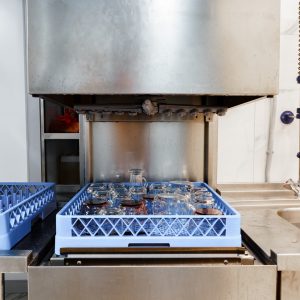
Before selecting a commercial dishwasher, evaluate your scullery workspace:
Machine Footprint: Ensure doorways, hallways, and kitchen entry points are wide enough to move the unit into position.
Table and Racking Space: Hood-type and conveyor dishwashers require adequate linear space for soiled dish sorting tables on the inlet side and clean dish drying tables on the exit side.
Ergonomic Clearance: Ensure staff have enough room to load racks and open doors safely during peak rushes.
Water is the lifeblood of any commercial dishwashing operation. When evaluating commercial dishwasher installation requirements, pay close attention to plumbing specifications:
Water Temperature: High-temp machines require a dedicated hot water supply line (typically 50°C to 60°C for wash cycles and 82°C for sanitizing rinses via booster heaters).
Water Pressure: Commercial dishwashers require consistent water pressure (usually between 20 to 40 PSI) to operate spray arms effectively. Pressure regulators or booster pumps may be required if local pressure fluctuates.
Water Filtration: Installing a water softener or filtration system is highly recommended in Malaysia to prevent calcium scale from ruining internal heating elements.
Unlike domestic units that pump wastewater into standard under-sink pipes, commercial dishwashers discharge large volumes of water rapidly. Ensure your kitchen features a floor drain positioned correctly relative to the machine’s gravity drain or drain pump outlet. Improper drainage can cause dangerous wastewater pooling on kitchen floors.
Commercial dishwashers draw substantial electrical current to power heavy-duty motors and booster heaters. Many units require dedicated three-phase electrical lines or specific high-voltage circuits. Always consult a licensed electrician to verify that your kitchen breaker panel meets the exact amperage and voltage specifications of the machine.
WhatsApp us