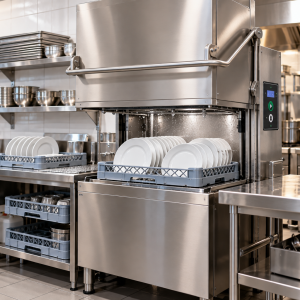
In a bustling commercial kitchen, water is one of the most heavily consumed resources. From food preparation and pot washing to sanitizing dishware, utility bills can escalate quickly if equipment is inefficient. Among all kitchen appliances, the dishwashing station plays a massive role in overall water usage. Understanding commercial dishwasher water consumption patterns helps restaurant operators optimize utility costs, reduce environmental impact, and improve overall kitchen efficiency.
Modern commercial dishwashers are engineered with advanced water-saving technologies, yet operational habits and machine maintenance heavily influence daily resource usage. This guide explores how to minimize water waste without compromising on hygiene.
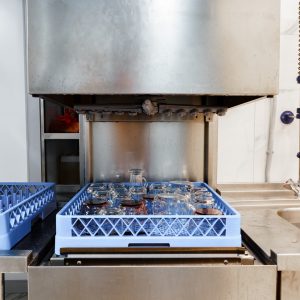
Unlike residential dishwashers that wash a single load for over an hour using recirculated water and multiple fill cycles, commercial units operate differently:
Fixed Rinse Volume: Most commercial undercounter and hood-type dishwashers consume a specific volume of water per final rinse cycle—typically ranging from 2 to 5 liters per rack.
Water Recirculation: During the wash cycle, water is continuously recirculated through the wash arms via a high-pressure pump, conserving water while blasting away food debris.
Cumulative Daily Usage: Multiply your racks per hour by the per-cycle rinse volume to calculate exact daily commercial dishwasher water consumption, revealing potential cost-saving opportunities.
Several mechanical and operational factors dictate how efficiently your commercial dishwasher utilizes water:
Machine Technology & Energy Star Ratings: Modern commercial dishwashers feature advanced heat recovery systems and optimized spray arm geometry that achieve superior sanitization with less water.
Pre-Rinsing Habits: Thoroughly scraping food scraps and pre-rinsing dishware with a spray valve prevents wash tanks from becoming overly soiled, reducing the frequency of water tank dumps and refills.
Correct Rack Loading: Overloading or improper stacking causes dishes to block water jets, requiring re-washes and doubling water consumption.
Implementing simple operational protocols can dramatically lower your kitchen’s water footprint:
Optimize Wash Batches: Never run half-empty racks. Wait until a rack is fully loaded before initiating a wash cycle.
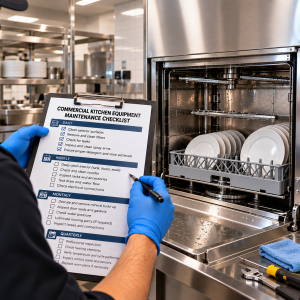
Regular Maintenance: Inspect spray arms and nozzles monthly for scale blockages. Clogged jets spray unevenly, leading to incomplete washes and wasted repeat cycles.
Upgrade to Water-Efficient Models: If your restaurant is operating an outdated, high-water-consumption dishwasher, upgrading to a modern water-saving unit delivers rapid ROI through lower utility bills.
WhatsApp us