In large-scale hospitality operations such as five-star hotel banquet halls, large hospitals, university cafeterias, and massive corporate dining complexes dishwashing is an industrial-scale operation. Thousands of plates, trays, glasses, and utensils flow through the scullery every single day. When manual or standard hood-type dishwashers cannot keep up, kitchens must transition to automated continuous-feed systems.
Evaluating a rack conveyor vs flight type dishwasher setup is essential for facility managers and executive chefs looking to maximize labor efficiency, water conservation, and wash throughput in high-volume environments.
setup is essential for facility managers and executive chefs looking to maximize labor efficiency, water conservation, and wash throughput in high-volume environments.

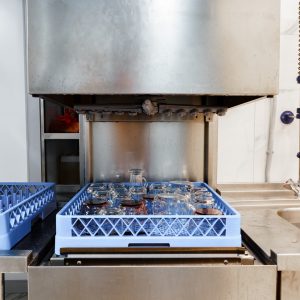
Rack conveyor dishwashers (also known as rack-trolley or peg conveyor machines) require kitchen staff to load soiled dishware into standard racks, which are then fed into the machine. A mechanical conveyor belt continuously pulls the racks through multiple zones: pre-wash, wash, power rinse, and final sanitizing rinse.
Operational Mechanism: Racks move sequentially through enclosed wash chambers.
Throughput: Typically processes anywhere from 150 to over 300 racks per hour.
Best Suited For: Medium-to-large hotels, banquet centers, and institutional dining halls with steady, high-volume dish flow.
Flight type dishwashers represent the absolute pinnacle of industrial dishwashing technology. Instead of loading dishware into separate racks, staff place plates, bowls, and trays directly onto a continuous, heavy-duty belt featuring specialized pegs or flights.
Operational Mechanism: Items travel continuously through massive multi-stage wash zones without the need for intermediate rack handling.
Throughput: Capable of washing thousands of items per hour, serving massive operations like international convention centers and large hospitals.
Labor Efficiency: Eliminates the time and labor required to manage, stack, and store empty dish racks.
When analyzing a rack conveyor vs flight type dishwasher investment for your facility, consider these critical parameters:
Dish Volume & Peak Surge: If your kitchen experiences massive, sudden surges of varied tableware, a flight type system handles un-racked sorting with unmatched speed. Rack conveyors are ideal when dishware arrives in organized batches.
Kitchen Floor Space: Flight type machines are significantly longer and require substantial scullery real estate compared to modular rack conveyors.
Utility Consumption: Both systems feature advanced water recirculation and heat recovery units to minimize water and electricity overhead, though flight type systems operate continuously and demand robust utility infrastructure.
WhatsApp us