Undercounter vs. Hood Type Dishwasher: Which Is Best for Your Restaurant?

Table of Contents

Designing an efficient dishwashing station is one of the most important decisions a restaurateur faces. In the heat of a busy dinner service, dirty plates, glassware, and cutlery must be cleaned and returned to the line with minimal delay. When outfitting a professional kitchen, choosing between an undercounter vs hood type dishwasher is a critical milestone that impacts floor space, staff ergonomics, and wash throughput.

While both machine types deliver commercial-grade sanitization, their physical layouts and operational speeds cater to very different restaurant sizes and workflows. This guide compares both options to help you make the right choice for your establishment.

Overview of Undercounter Commercial Dishwashers

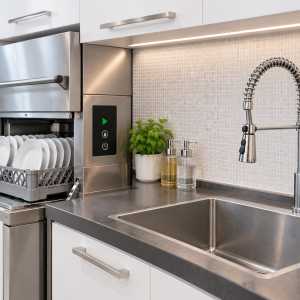
Undercounter dishwashers resemble residential front-loading dishwashers in appearance but are engineered with heavy-duty commercial motors, pumps, and rapid wash cycles (typically 2 to 3 minutes).

  • Best Suited For: Small cafes, coffee bars, boutique restaurants, and pubs with limited floor space.

  • Key Advantages: They fit neatly beneath standard kitchen or bar counters, preserving precious floor space and requiring minimal kitchen remodeling.

  • Capacity Limitations: They generally handle around 20 to 30 racks per hour, making them ideal for lower-volume operations.

Overview of Hood-Type (Pass-Through) Dishwashers

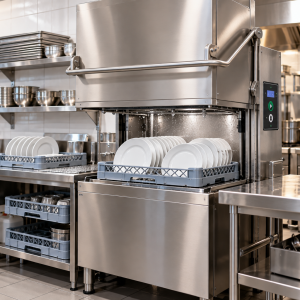
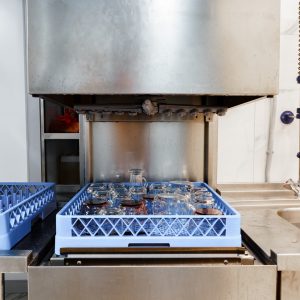
Hood-type dishwashers—often called pass-through dishwashers—operate on a table-to-table workflow. Staff slide a soiled dish rack into the machine, pull down an insulated hood to start the wash cycle, and slide the clean rack out the other side onto a clean dish table.

  • Best Suited For: Mid-to-large restaurants, busy bistros, and banquet kitchens with high meal turnover.

  • Key Advantages: Significantly faster wash cycles (60 to 90 seconds) and higher output (up to 60+ racks per hour). They pair seamlessly with pre-rinse sinks and sorting tables for ergonomic workflow.

  • Space Requirements: They require dedicated corner or straight-line dishwashing stations with adequate clearance for soiled and clean dish tables.

Key Comparison Factors: Undercounter vs. Hood Type Dishwasher

When analyzing an undercounter vs hood type dishwasher setup for your restaurant, evaluate these four operational pillars:

  • Kitchen Space: If square footage is tight, an undercounter unit is the clear winner. If you have a dedicated scullery area, a hood-type system maximizes throughput.

  • Staff Ergonomics: Hood-type units eliminate the bending required with undercounter models, reducing operator fatigue during long shifts.

  • Water and Power Usage: Hood-type machines typically feature larger booster heaters and water volumes per cycle, demanding robust electrical and plumbing connections.

Category :

Share :