A commercial ice machine is essential for food and beverage businesses. It keeps drinks cold and customers satisfied. However, ice is also considered a food product. Therefore, proper maintenance is important for maintaining hygiene.
Without regular care, ice machines can develop unpleasant odors and mechanical problems. As a result, businesses may face unexpected repairs and poor ice quality. Regular commercial ice machine maintenance helps prevent these issues. It also extends equipment lifespan.
Neglecting your ice maker can affect hygiene and machine performance. For example, poor maintenance can cause cloudy ice and unpleasant tastes. Additionally, mineral deposits can reduce ice production.
Proper commercial ice machine maintenance helps prevent several common problems:
Scale Accumulation: Calcium and magnesium minerals can build up on evaporator plates. Over time, these deposits reduce freezing efficiency. Consequently, the machine may produce less ice.
Slime and Mold Growth: Warm and moist storage bins encourage mold and bacterial growth. Therefore, regular cleaning and sanitizing are essential. This also helps maintain ice quality.
Compressor Strain: Dirty condenser coils and restricted water flow affect refrigeration efficiency. As a result, the machine consumes more electricity. Furthermore, prolonged strain can increase the risk of mechanical failure.
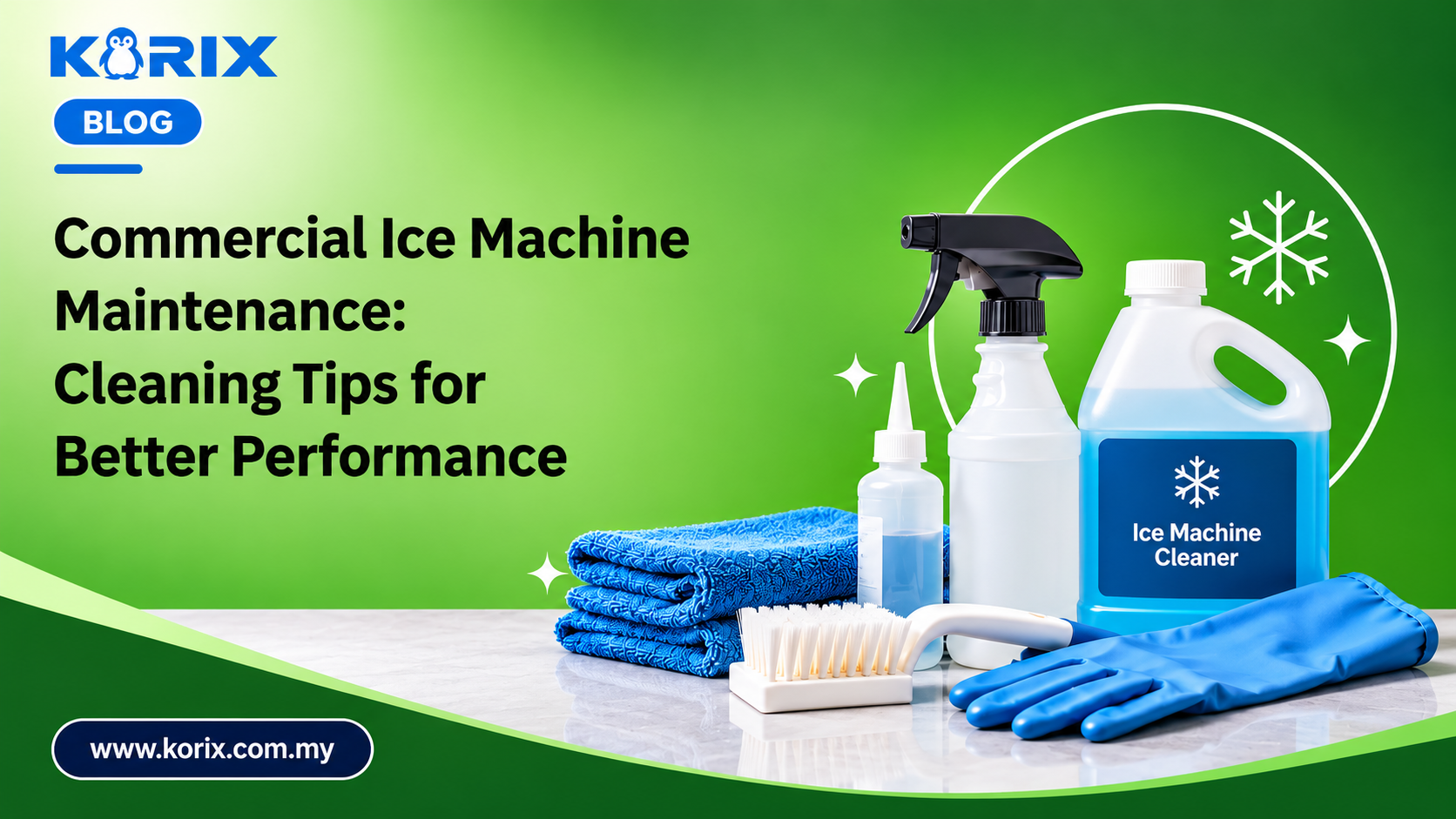
A consistent cleaning schedule keeps your ice machine hygienic and efficient. Generally, the process involves two main stages. First, remove mineral deposits through cleaning. Next, eliminate bacteria through sanitizing.
1. Cleaning the Water System (Every 3 to 6 Months)
First, switch off the ice maker and empty the storage bin.
Next, remove the water curtain, distribution tubes and ice thickness probe. Always follow the manufacturer’s instructions.
Then, apply a manufacturer-approved nickel-safe scale remover. This product helps dissolve mineral deposits on evaporator plates.
Finally, rinse all components thoroughly before restarting the machine.
2. Sanitizing the Storage Bin and Surfaces
Begin by washing the internal bin walls, door gaskets and scoops with food-grade sanitizer.
Additionally, avoid abrasive scouring pads. These can scratch plastic surfaces and create areas where bacteria collect.
After cleaning, follow the sanitizer’s instructions for rinsing and drying. This helps prevent unwanted moisture buildup.
Dust, flour and kitchen grease can clog air filters and condenser coils. Consequently, the machine may struggle to release heat efficiently.
To prevent this, inspect the condenser coils every month. Use a soft brush or vacuum according to the manufacturer’s instructions. Furthermore, clean coils improve airflow and reduce energy consumption. This also helps prevent system overheating.
Daily and monthly cleaning helps maintain basic machine performance. However, professional servicing is equally important for long-term reliability.
For best results, schedule inspections with certified technicians every six to twelve months. During these inspections, technicians can examine electrical components and refrigeration systems. They can also check internal water connections.
Additionally, replace inline water filter cartridges every three to six months. Always follow the manufacturer’s recommended schedule. This helps maintain water quality and prevent mineral buildup.
Regular commercial ice machine maintenance helps businesses maintain hygiene and consistent ice quality. Therefore, operators should follow a proper cleaning and sanitizing schedule. Additionally, monthly condenser inspections help maintain machine efficiency. Meanwhile, timely filter replacements reduce mineral buildup. Businesses should also arrange professional servicing to identify potential problems early. As a result, proper maintenance can reduce repair costs and extend equipment lifespan. Ultimately, these practices ensure a reliable supply of clean ice for daily operations.
WhatsApp us